The fitness app market has exploded in recent years, with more people embracing digital health and wellness solutions. As entrepreneurs and businesses recognize this opportunity, one critical question arises: how much does it cost to develop a fitness app?
Understanding the investment required for fitness app development is crucial for making informed business decisions. The fitness app development cost varies significantly based on features, complexity, and technical requirements, making proper budget planning essential for success.
In this comprehensive guide, we’ll break down the exact costs involved in fitness app development, explore the key factors that influence pricing, and provide actionable strategies to optimize your development budget while building a successful fitness platform.
Latest Market Statistics for Fitness Apps
The fitness app industry presents compelling opportunities for entrepreneurs and investors:
The global fitness app market size was estimated at USD 10.59 billion in 2024 and is projected to reach USD 23.21 billion by 2030, growing at a CAGR of 13.88% from 2025 to 2030 (Grand View Research)
According to a report by Business of Apps, fitness apps were downloaded 858 million times in 2023 .
North America dominated the global fitness app industry and accounted for a 46.61% revenue share in 2024.
The global market for AI fitness apps is expected to surpass $23.98 billion by 2026 (3DLook)
Global AI in Fitness and Wellness Market Size is valued at USD 9.8 Billion in 2024 and is predicted to reach USD 46.1 Billion by the year 2034 at a 16.8% CAGR (InsightAce Analytic)
These numbers demonstrate the massive potential for businesses investing in fitness app development, making it essential to understand the costs and budget requirements.
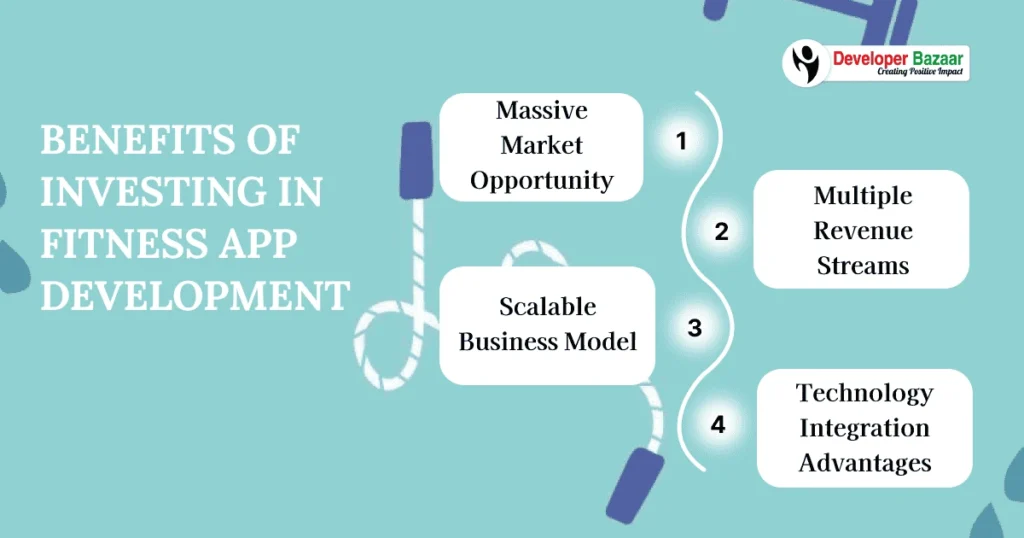
Benefits of Investing in Fitness App Development
Massive Market Opportunity
The fitness app market’s consistent growth at 13.88% CAGR presents significant revenue potential for well-executed platforms. With increasing health awareness and digital adoption, fitness apps enjoy strong user demand and retention rates.
Multiple Revenue Streams
Fitness apps support diverse monetization strategies, including subscriptions, premium coaching, corporate wellness partnerships, and in-app purchases, creating sustainable business models with recurring revenue opportunities.
Scalable Business Model
Digital fitness platforms can serve unlimited users without physical constraints, enabling rapid scaling and global reach while maintaining relatively low operational costs compared to traditional fitness businesses.
Technology Integration Advantages
Modern fitness apps leverage AI, machine learning, and IoT integration to provide personalized experiences that build strong user loyalty and justify premium pricing models in competitive markets.
Top Factors That Drive Fitness App Development Costs
Many entrepreneurs underestimate fitness app development costs, leading to budget overruns and project delays. These eight critical factors determine your total investment and help you plan realistic budgets from the start.
App Features and Functionality
The number and complexity of features directly impact fitness app development cost. Basic tracking features cost significantly less than advanced AI-powered coaching systems, computer vision for form correction, or comprehensive nutrition planning modules.
AI and Machine Learning Integration
AI-powered fitness apps require sophisticated algorithms and machine learning models, with the global market for AI fitness apps expected to surpass $23.98 billion by 2026. These features typically add a little extra to development costs but significantly improve user engagement and retention rates.
UI/UX Design Complexity
Custom animations, personalized interfaces, and advanced visual elements increase design costs for highly customized user experiences that enhance user engagement.
Platform Compatibility
Developing for multiple platforms (iOS, Android, wearables, web) increases costs but expands market reach. Cross-platform app development like React Native can reduce fitness app development cost by 30-40% compared to separate native development.
Third-Party Integrations
Integration with payment gateways, wearable devices, health APIs, and social platforms adds per integration, depending on complexity and security requirements for seamless user experiences.
Compliance and Security Requirements
HIPAA and GDPR compliance for health data protection adds to development costs but is essential for user trust and legal compliance in healthcare applications.
Development Team Location and Expertise
Team location significantly affects costs. US developers charge $100-$250/hour, while skilled developers in India charge $15-$30/hour without compromising quality.
Backend Infrastructure and Scalability
Robust server architecture, database design, and cloud infrastructure for handling user data, real-time syncing, and app performance require substantial backend development investment for scalable solutions.
How Much Does it Cost to Develop a Fitness App?
The cost to develop fitness app solutions varies significantly based on complexity, features, and technical requirements. Here’s a comprehensive breakdown of development investment ranges:
App Complexity
Development Cost Range
Basic App
$20,000 - $40,000
Advanced App
$35,000 - $60,000
Complex App
$60,000 - $80,000+
Please note that these are estimated ranges. Actual costs may vary based on specific requirements, team location, and project complexity.
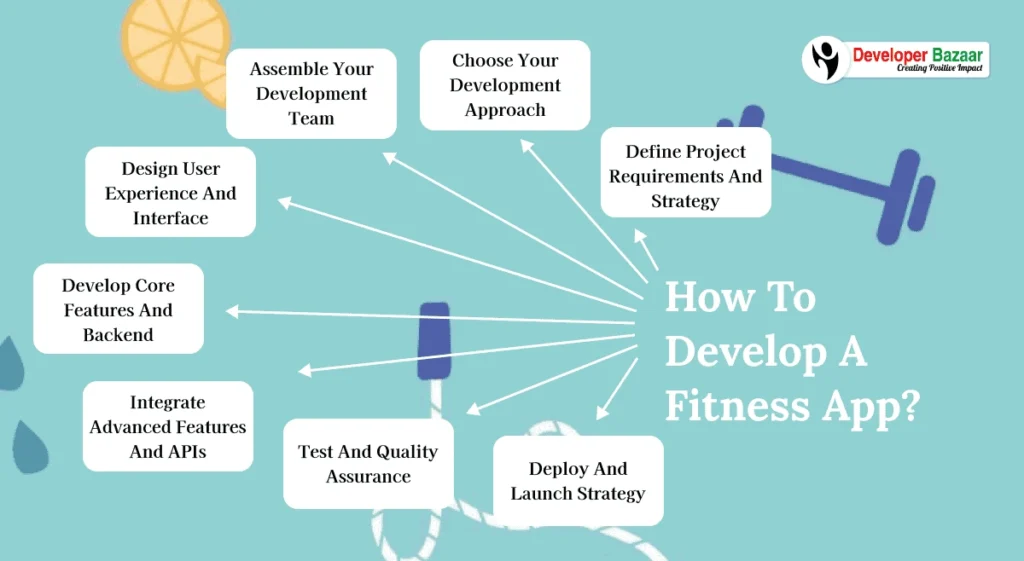
How to Develop a Fitness App?
Building a successful fitness app requires a strategic, step-by-step approach that balances user needs, technical requirements, and budget constraints. Follow this proven development process to launch your fitness platform efficiently.
Define Project Requirements and Strategy
Start by clearly defining your target audience, core features, and unique value proposition. Conduct market research to identify opportunities and determine whether you need basic tracking or advanced AI-powered coaching features.
Choose Your Development Approach
Decide between native app development for premium performance or cross-platform frameworks for cost efficiency. When making this critical technology decision, consider your budget, timeline, and performance requirements.
Assemble Your Development Team
You can hire in-house developers, work with freelancers, or partner with a professional mobile app development company. Each approach has different cost implications and quality considerations for your project success.
Design User Experience and Interface
Create intuitive, engaging designs that motivate users to maintain their fitness routines. Invest in professional UI/UX design as it directly impacts user adoption and long-term engagement rates.
Develop Core Features and Backend
Build your app’s foundation with essential features like user registration, workout tracking, and progress analytics. Implement robust backend systems to handle user data securely and efficiently.
Integrate Advanced Features and APIs
Add AI coaching, wearable device connectivity, social features, and third-party integrations that differentiate your app from competitors and provide comprehensive user value.
Test and Quality Assurance
Conduct thorough testing across multiple devices, operating systems, and usage scenarios. Quality assurance prevents costly post-launch fixes and ensures positive user experiences from day one.
Deploy and Launch Strategy
Submit your app to app stores, implement analytics tracking, and execute your marketing strategy. Plan for ongoing updates and feature enhancements based on user feedback and market trends.
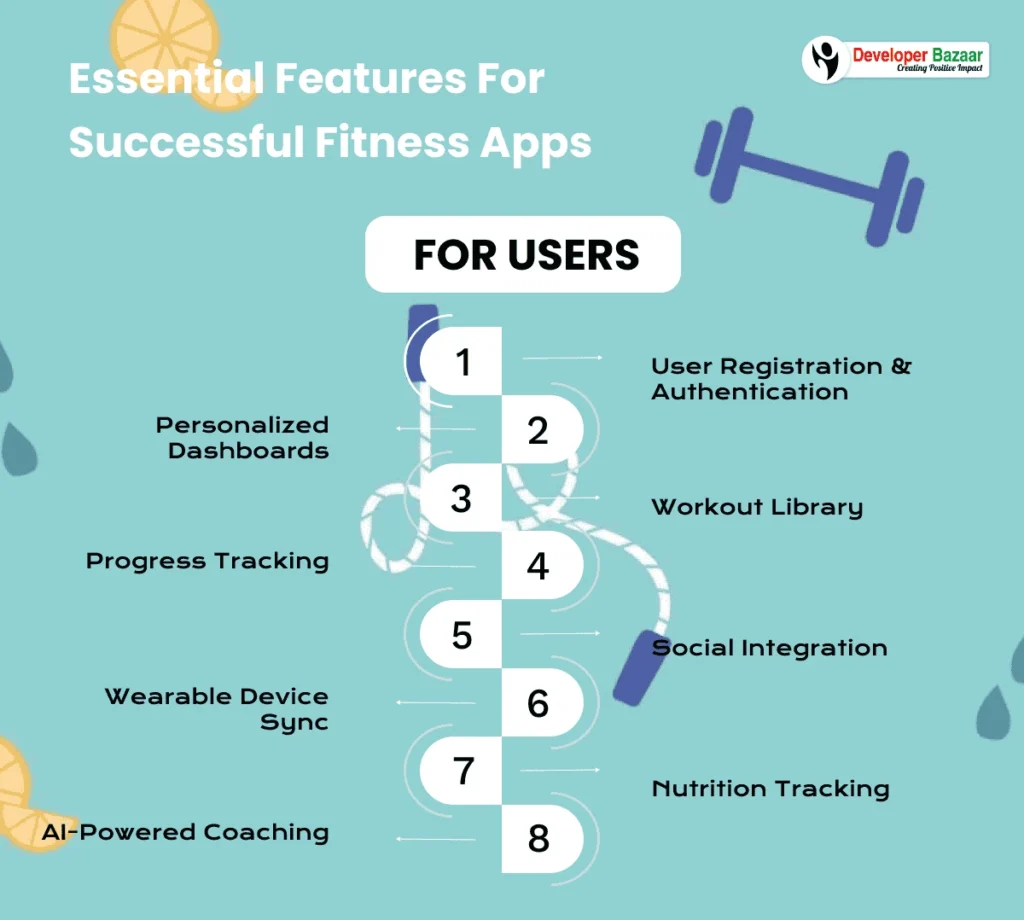
Essential Features for Successful Fitness Apps
In a crowded fitness app market, the right features separate successful platforms from failed launches. These core capabilities ensure user engagement, operational efficiency, and sustainable revenue growth.
User App Features
User Registration & Authentication
Secure sign-up with social media integration and biometric login options. Reduces onboarding friction while ensuring data protection and user trust.
Personalized Dashboards
Custom fitness goals and progress tracking tailored to individual user preferences. Increases user engagement by 65% through personalized experience and motivation.
Workout Library
Comprehensive exercise database with HD video instructions and difficulty levels. Provides users with professional-quality guidance, reducing the need for expensive personal trainers.
Progress Tracking
Visual charts, achievement badges, and milestone celebrations that gamify fitness journeys. Boosts user retention by 40% through consistent motivation and visible progress indicators.
Social Integration
Community features, workout sharing, and friend challenges that build accountability. Creates viral growth potential while increasing user session time by 35%.
Wearable Device Sync
Seamless integration with Fitbit, Apple Watch, and 20+ popular fitness devices. Provides real-time health data synchronization for accurate tracking and enhanced user experience.
Nutrition Tracking
AI-powered meal planning, barcode scanning, and macro counting capabilities. Delivers comprehensive wellness approach that increases user lifetime value by 50%.
AI-Powered Coaching
Machine learning algorithms that adapt workouts based on performance and preferences. Provides personalized training equivalent to $100+/hour personal trainer at fraction of the cost.
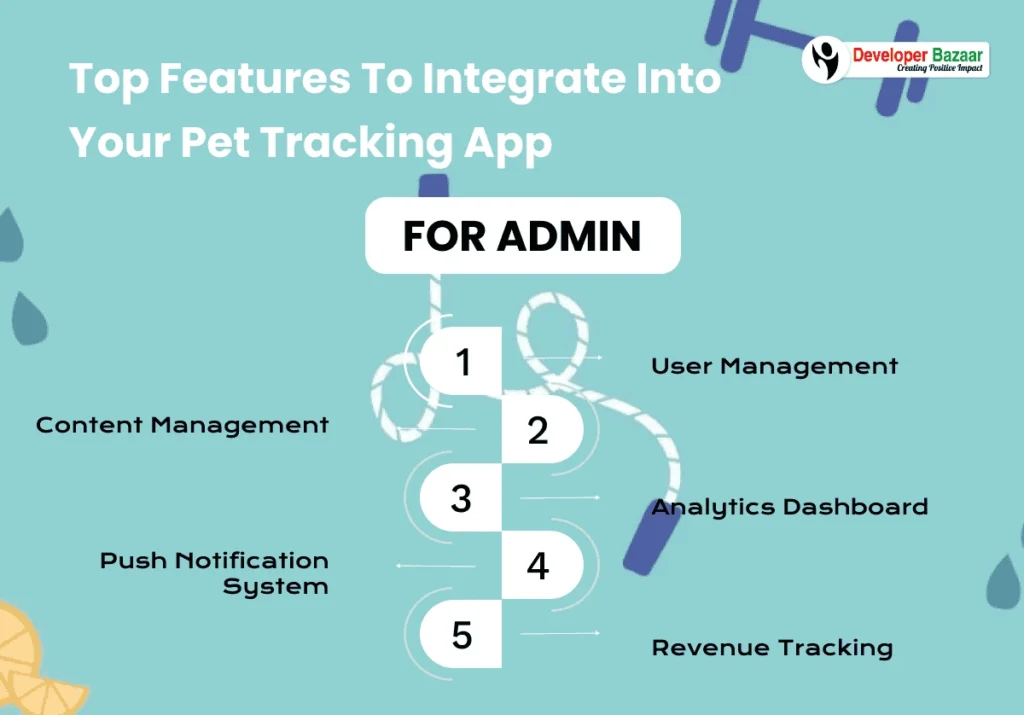
Admin Panel Features
User Management
Comprehensive dashboard to monitor user activity, engagement patterns, and churn indicators. Enables proactive retention strategies and improves user lifetime value by 30%.
Content Management
Intuitive system to update workout libraries, add new exercises, and manage nutrition databases. Allows rapid content scaling without technical expertise or developer dependency.
Analytics Dashboard
Real-time insights into app performance, user behavior patterns, and feature usage statistics. Provides data-driven decision-making capabilities that optimize user experience and revenue.
Push Notification System
Intelligent messaging system with personalized workout reminders and motivational content. Increases user re-engagement by 45% through targeted, behavior-based notifications.
Revenue Tracking
Comprehensive monitoring of subscription metrics, in-app purchases, and conversion funnels. Maximizes monetization opportunities through detailed financial performance insights and trend analysis.
Technology Stack for Fitness App Development
Component
Recommended Technologies
Frontend (Mobile)
React Native, Flutter, Swift (iOS), Kotlin (Android)
Backend
Node.js, Python Django, Ruby on Rails
Database
PostgreSQL, MongoDB, Firebase
AI/ML Integration
TensorFlow, PyTorch, Core ML
Cloud Services
AWS, Google Cloud, Microsoft Azure
Real-time Features
Socket.IO, Firebase Real-time Database
Payment Processing
Stripe, PayPal, Apple Pay, Google Pay
Analytics
Google Analytics, Firebase Analytics
Wearable Integration
HealthKit (iOS), Google Fit (Android)
Technology selection depends on your specific requirements, budget, and long-term scalability needs.
Monetization Strategies for Fitness Apps
Subscription-Based Model
Offer premium features like personalized coaching, advanced analytics, and exclusive content through monthly or annual subscriptions. This model provides predictable recurring revenue and strong customer lifetime value.
Freemium Approach
Provide basic features for free while charging for premium capabilities. This strategy maximizes user acquisition while converting engaged users to paid subscribers through demonstrated value proposition.
Corporate Wellness Partnerships
Partner with companies to provide employee wellness programs. Corporate clients offer high-value contracts and stable revenue streams for comprehensive fitness platforms with enterprise features.
In-App Purchases and Premium Content
Sell specialized workout programs, nutrition plans, or one-on-one coaching sessions. This model works well for established apps with engaged user bases seeking additional value.
Conclusion
Fitness app development represents a strategic investment in a rapidly growing market with strong ROI potential. The cost to develop fitness app solutions ranges from $20,000 for basic apps to $80,000+ for complex AI-powered platforms, with success depending on strategic planning and execution.
Key cost factors include feature complexity, AI integration, platform compatibility, and team expertise. Wise technology choices like cross-platform development can reduce fitness app development cost by 30-40% while maintaining excellent user experiences.
The global fitness app market’s growth at 13.88% CAGR through 2030 creates exceptional opportunities for well-executed platforms. With proper planning and an expert fitness app development company, your fitness app investment can deliver substantial returns while making a positive impact on users’ health and wellness journeys.
FAQs
Q1. What is the average cost to develop a fitness app in 2025?
Fitness app development typically costs $20,000-$40,000 for basic apps, $35,000-$60,000 for advanced features, and $60,000- $80,000+ for complex AI-powered platforms with comprehensive functionality.
Q2. How long does fitness app development take?
Basic fitness apps require 3-6 months, while advanced apps with AI features take 6-9 months, and complex platforms need 9-12 months for complete development and testing.
Q3. Should I choose native or cross-platform development?
Cross-platform frameworks like React Native or Flutter reduce costs by 30-40% and accelerate time-to-market, making them ideal for most fitness app requirements while maintaining good performance.
Q4. What ongoing costs should I budget after launch?
Plan for annual maintenance costs of 15-20% of initial development investment, covering updates, hosting, security patches, and feature enhancements essential for long-term success.
Q5. How do AI features impact development costs?
AI-powered coaching and personalization add more to development costs, but significantly improve user engagement and retention rates and justify premium pricing models for competitive advantage.
Q6. What's the ROI potential for fitness apps?
Well-executed fitness apps typically achieve break-even within 12-18 months and deliver 200-400% returns within three years, supported by the market’s 13.88% CAGR growth rate.
Q7. Do I need HIPAA compliance for fitness apps?
HIPAA compliance is required for apps handling protected health information, adding some costs, but it is absolutely essential for user trust and legal compliance in healthcare applications.
Q8. When should I hire a professional development company?
Consider professional fitness app development services when you need technical expertise, faster time-to-market, proven experience, or comprehensive support from concept to successful market launch.
In an era where convenience drives consumer behavior, on-demand service apps have transformed how people manage their daily tasks. Among these solutions, laundry and dry-cleaning apps like JustClean are revolutionizing the cleaning services industry, allowing users...
In an era where convenience drives consumer behavior, on-demand service apps have transformed how people manage their daily tasks. Among these solutions, laundry and ...
How to Develop Product Scanner App…
How to Develop Product Scanner App Like Yuka in 2025?
Consumer trust in food transparency has never been higher, with health-conscious shoppers demanding instant access to product information that cuts through marketing claims and reveals actual nutritional value. Among these solutions, product scanner apps like Yuka...
Consumer trust in food transparency has never been higher, with health-conscious shoppers demanding instant access to product information that cuts through marketing claims and ...
How Much Does It Cost to…
How Much Does It Cost to Create an App Like Shazam in 2025?
Music recognition apps have transformed how we discover and connect with music. While the music app market is estimated at USD 46.66 billion in 2024 and projected to reach USD 108.39 billion by 2030, growing at...
Music recognition apps have transformed how we discover and connect with music. While the music app market is estimated at USD 46.66 billion in ...
How to Develop a Babysitter &…
How to Develop a Babysitter & Nanny Finder App Like UrbanSitter
The modern family landscape has transformed dramatically over the past decade. Traditional childcare arrangements no longer meet the demands of today’s busy parents who require flexible, trustworthy, and on-demand babysitting services. Parents today need immediate access...
The modern family landscape has transformed dramatically over the past decade. Traditional childcare arrangements no longer meet the demands of today’s busy parents who ...
Guide to Build an App Like…
Guide to Build an App Like Carrefour in Dubai in 2025
At this point in time, when digital transformation is reshaping retail across the UAE, businesses are looking for solutions that combine traditional shopping with modern convenience. Among these solutions, retail apps like Carrefour are gaining immense...
At this point in time, when digital transformation is reshaping retail across the UAE, businesses are looking for solutions that combine traditional shopping with ...
How Much Does It Cost To…
How Much Does It Cost To Develop An App Like Tabby?
Have you ever wondered, “What does it take to develop an app like Tabby?” Buy Now Pay Later (BNPL) is a rapidly growing concept that allows users to purchase items immediately and pay later, either partially...
Have you ever wondered, “What does it take to develop an app like Tabby?” Buy Now Pay Later (BNPL) is a rapidly growing concept ...
How Much Does it Cost to…
How Much Does it Cost to Create Ecommerce App like D4D?
E-commerce and grocery delivery apps have revolutionized how people shop for daily necessities and luxury items. While some retail giants focus on broad marketplace solutions, specialized apps like D4D are addressing specific niches by offering AI-powered...
E-commerce and grocery delivery apps have revolutionized how people shop for daily necessities and luxury items. While some retail giants focus on broad marketplace ...
Payment Gateway Integration Process – A…
Payment Gateway Integration Process – A Comprehensive Guide
With the rise of fintech, online payments have become faster and easier than ever. Businesses and individuals can enjoy instant payments and quick settlements, all with the help of payment gateways. A payment gateway is a...
With the rise of fintech, online payments have become faster and easier than ever. Businesses and individuals can enjoy instant payments and quick settlements, ...
How to Develop a Pet Dog…
How to Develop a Pet Dog Translator App in 2025?
The relationship between humans and their pets has evolved dramatically, with pet owners spending over $261 billion annually on their furry companions. This shift has created unprecedented demand for technology that bridges the communication gap between pets...
The relationship between humans and their pets has evolved dramatically, with pet owners spending over $261 billion annually on their furry companions. This shift has ...
How to Create an App Like…
How to Create an App Like OpenSooq in 2025?
At this point in time, when digital marketplaces are transforming commerce globally, people are looking for platforms that connect buyers and sellers seamlessly while providing localized experiences. Among these solutions, marketplace app development solutions like OpenSooq...
At this point in time, when digital marketplaces are transforming commerce globally, people are looking for platforms that connect buyers and sellers seamlessly while ...
Developer Bazaar Technologies serves with highly proficient Prototyping & Strategy, Brand Promotion, Enterprise Development, Web Engineering, API Integrations, IT Consulting, End-to-End IT Services and Solutions, leads globally and is headquartered in Indore, India.